
 Saurabh Agrawal
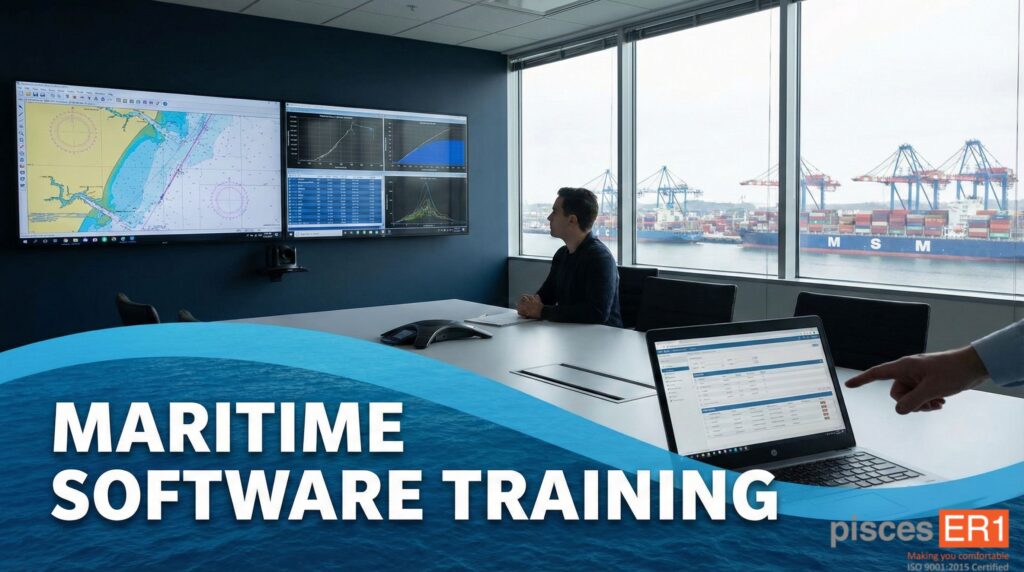
 The maritime industry faces a critical challenge: ships have evolved into floating data centers, yet many seafarers board vessels without adequate training. This gap isn’t just frustrating – it’s becoming a serious operational risk.
Just as no captain would sail with a crew untrained in safety drills, modern shipping companies can no longer deploy personnel who lack competency in the digital systems governing vessel operations.
The Disconnect Between Onshore Software and Offshore Crew
Shore offices run on sophisticated software – ERP systems, fleet analytics dashboards, and integrated operations platforms. Yet aboard vessels, engineers and officers often struggle with these same systems, not from lack of aptitude, but from lack of training.
This disconnect creates costly problems:
- Engineers spend hours navigating Planned Maintenance Systems (PMS) they’ve never been trained on, reverting to paper workarounds
- Deck officers underutilise navigation software features that could optimise routes and save fuel
- Shore teams grow frustrated with incorrect data input and delayed digital reports
- Poor data quality leads management to question software investments rather than recognise training deficits
The root cause is simple: companies invest heavily in software but consistently underinvest in training the people who must use it.
STCW 2025: New Technology Competency Requirements for Seafarers
The 2025 STCW amendments mark a watershed moment, explicitly addressing technology competencies for the first time.
New mandatory requirements include:
- Proficiency in electronic navigation systems
- Cybersecurity fundamentals understanding
- Digital maintenance and reporting platform operation
- Data integrity and system integration concepts
What this means: These aren’t optional enhancements – they’re becoming mandatory for certification and revalidation. Modern seafaring is now as much about managing information systems as handling machinery.
The opportunity: Genuine upskilling provides a competitive advantage through operational efficiency, enhanced data quality, and reduced user errors.
Top IT Skills Every Modern Seafarer Needs Today
Beyond compliance, seafarers need practical digital competencies for daily operations:
- Planned Maintenance System (PMS) Proficiency
- Electronic Navigation and Voyage Planning
- Data Management and Reporting
- Cybersecurity Awareness
- Communication Platform Competency
- Digital Troubleshooting
PMS Training: Generic vs. Vessel-Specific (Why One-Size-Fits-All Fails)
Generic PMS training is one of the most common and costly mistakes in maritime software training.
Generic Training Covers
- Universal concepts like creating work orders
- Basic maintenance schedules
- General equipment manual access
- Standard system navigation
Why It Fails: Each ship’s PMS is configured differently based on specific equipment, maintenance philosophies, spare parts inventory, and company procedures. Generic training doesn’t prepare engineers for their actual vessel’s configuration.
Vessel-Specific Training Delivers
- Precise equipment hierarchy navigation
- Specific preventive maintenance jobs
- Company workflow for parts requisitioning
- Vessel-specific documentation and procedures
The Results Difference:
- Vessel-specific training: Productive within days
- Generic training only: Requires weeks or months to achieve proficiency, with persistent errors during the learning curve
Overcoming Scalability Challenges:
- Simulation environments replicating vessel configurations
- Modular content combining core concepts with vessel-specific modules
- Remote training by technical superintendents before embarkation
Return on Investment: For maritime companies with high crew rotation rates and diverse fleets, vessel-specific training delivers measurable returns through reduced onboarding time, fewer errors, better compliance, and improved crew confidence.
Boosting Crew Confidence and Retention Through Trainings
Comprehensive digital training impacts far more than operational efficiency – it directly affects crew confidence, satisfaction, and retention.
When seafarers board vessels equipped with sophisticated software systems they don’t understand, it creates immediate stress and anxiety.
Engineers worry about making mistakes that could impact machinery reliability. Officers feel insecure about properly completing digital reporting requirements.
On the other hand, crew members who receive thorough training in the digital tools they’ll use daily report significantly higher confidence levels. They feel empowered rather than overwhelmed by technology, viewing sophisticated systems as tools that make their work easier rather than obstacles to overcome.
This confidence translates into better job performance, reduced stress, and a more positive shipboard environment.
The Path Forward
The maritime industry’s digital transformation is today’s reality, not tomorrow’s trend. Ships with sophisticated software require crews with sophisticated digital skills.
Key Takeaways:
- Software training is as critical as safety drills for modern operations
- STCW 2025 makes technology competency mandatory, not optional
- Vessel-specific training dramatically outperforms generic approaches
- Digital upskilling directly improves crew confidence and retention
- Companies prioritising training gain competitive advantages
For Shipping Companies: Invest in comprehensive training programs beyond checkbox compliance. The returns through operational efficiency, regulatory compliance, and crew retention far exceed the costs.
For Seafarers: Digital competency is no longer optional. Embracing these skills enhances career opportunities, job satisfaction, and confidence in contemporary seafaring.
At PISCES ER1 Marine, we understand these challenges intimately and remain committed to bridging the maritime skills gap through comprehensive training solutions tailored to modern seafarers and the companies that employ them.
About PiscesER1 Marine
PiscesER1 Marine’s purpose is to bridge the gap between maritime expertise and cutting-edge technology, ensuring a digital transformation that optimises ship operations, enhances ship-shore synergy, and benefits the entire shipping industry.
We believe that the success of any system is as good as its end user.
We empower the end user.
Contact us today to discuss how we can help protect your vessels, ensure compliance, and maintain operational resilience in an increasingly connected maritime environment.
🌐 pisceser1marine.com/contact-us/
📧 operations@pisces.seastella.in
📞 +91 22 62215299
 Sandeep Kumar